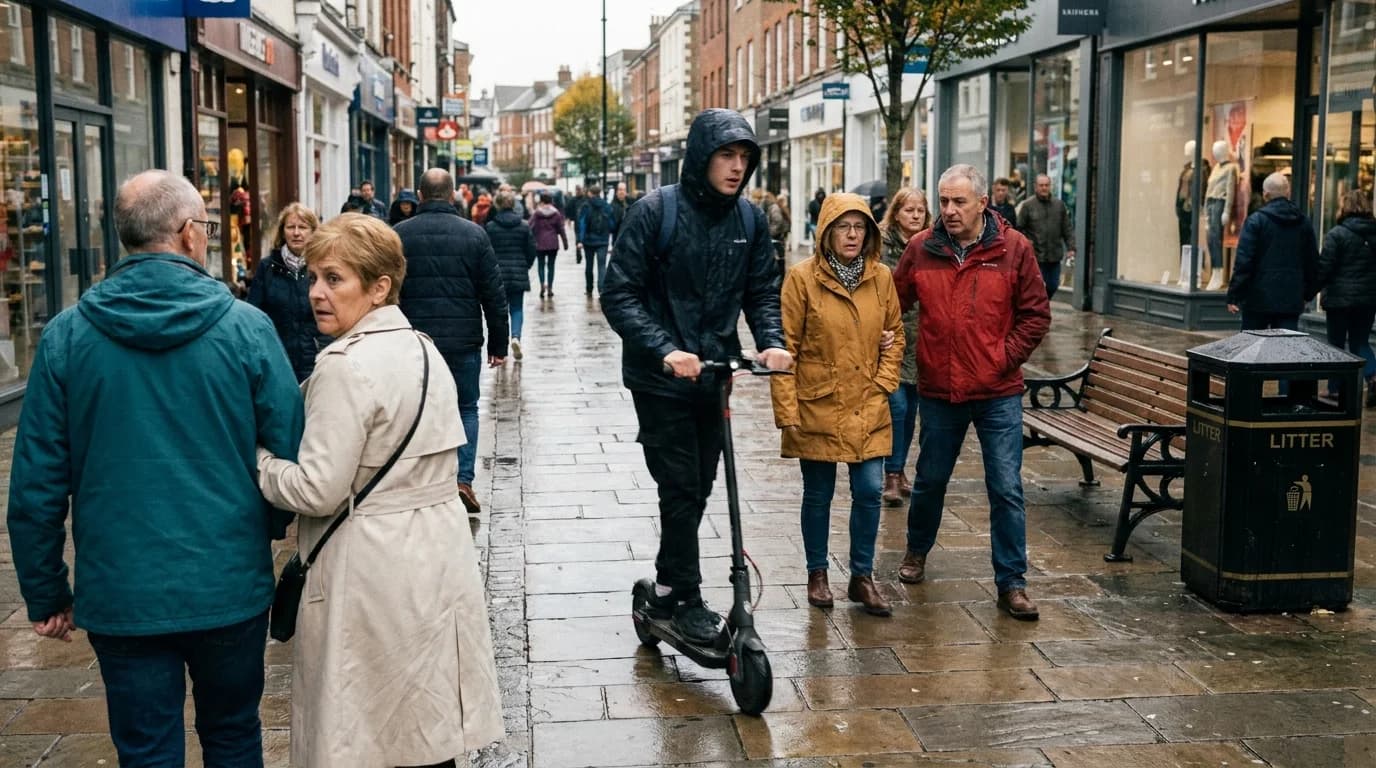
Injuries caused by e-bikes, e-scooters and electric motorbikes are rising quickly, and the people most often hurt are pedestrians. The total incurred cost of claims to the Motor Insurers' Bureau for injuries involving e-scooters, electric motorbikes and non-compliant e-bikes, the machines the law treats as motor vehicles, has passed £110 million, roughly double the figure of a year earlier, according to reporting by the BBC. For a claim to be assessed fairly, the injuries have to be set out in an independent medical report, and that is where a medical reporting organisation comes in.
The figures give a sense of the scale. The BBC reported 168 claims to the Motor Insurers' Bureau in 2025 for accidents involving these vehicles, the highest yet, with the largest single payout reaching £20 million for a child left with catastrophic injuries.
Who is getting hurt
More than half of the claims handled by the Motor Insurers' Bureau come from pedestrians, according to the organisation. People are being struck while crossing the road or walking on the pavement. The injuries run from cuts and fractures through to serious, life-changing harm.
Why these claims are not straightforward
Part of the difficulty is that the word "e-bike" covers very different vehicles in law. A legal electric bike, known as an electrically assisted pedal cycle, has a motor of no more than 250 watts, gives assistance only while the rider pedals, and cuts that assistance at 15.5 miles per hour. A machine that meets those limits is treated as an ordinary bicycle, with no need for a licence, tax or insurance.
Many machines on the road do not meet those limits. Once an e-bike is adapted to go faster, or is really an electric motorbike or a private e-scooter, the law treats it as a motor vehicle, which brings a requirement for insurance that most riders do not have. Private e-scooters cannot legally be used on public roads or pavements at all, outside the official rental trials.
Where the compensation comes from
The route to compensation depends on the vehicle. Where an injury is caused by an uninsured machine that counts as a motor vehicle, such as a non-compliant e-bike, an electric motorbike or a private e-scooter, the injured person may be eligible to make a claim to the Motor Insurers' Bureau, depending on the vehicle's legal status, liability and the circumstances of the accident. The Bureau compensates the victims of uninsured vehicles. Where the injury is caused by a legal electric bike, which is treated as a bicycle, the claim is usually made against the rider, and negligence must be established. Payment usually comes from the rider personally, or from a household, cycling or personal liability policy where one exists. Where the claim is paid by the Motor Insurers' Bureau, the cost is recovered through a levy on all UK motor insurers, which is now feeding through into higher motor insurance premiums for other drivers.
The role of independent medical evidence
Whatever the vehicle, the injured person is typically a pedestrian or another vulnerable road user, not the occupant of a car. That matters for the medical report. The MedCo system controls how the first medical report is sourced only where the injured person was the occupant of a motor vehicle bringing a qualifying low-value soft-tissue claim. Pedestrians, cyclists and other vulnerable road users are outside it, so their medical experts are instructed directly and matched to the injury. If the injured person was themselves a car occupant, MedCo can still apply to their claim.
The report itself is governed by Part 35 of the Civil Procedure Rules. The expert's overriding duty is to the court, and the report must set out the injuries, the treatment needed and the likely recovery, so the claim can be assessed on sound medical evidence. For harm as varied as that caused by these vehicles, from fractures and head injuries to lasting psychological effects, matching each case to an expert in the right field is what makes the report reliable.
Sources: Motor Insurers' Bureau (mib.org.uk), BBC News, GOV.UK electric bike rules, Ministry of Justice RTA Small Claims Protocol, MedCo Rules.
How Expert Medical helps
Expert Medical is an independent medical reporting organisation. We prepare CPR Part 35 compliant reports for the solicitors and insurers who handle e-bike and e-scooter injury claims across England and Wales. We source the right expert, arrange the examination near the injured person, and check the report for compliance before it is delivered. We provide the medical evidence; we do not give legal advice or manage the claim.