
Medico-Legal Reports
Independent medico-legal reports for solicitors and insurers across England and Wales. We are a MedCo registered Medical Reporting Organisation (MRO) instructing GMC and HCPC registered experts. We provide the medical evidence; the legal decisions stay with you.
What is a medical legal report?
A medical legal report is an independent medical opinion prepared for a court that sets out a claimant's injuries, their cause and their likely prognosis for use as evidence in a legal claim.
It is written by a suitably qualified medical expert, not by the treating clinician acting as a carer, and its purpose is to help the court understand the medical facts rather than to argue either side's case. A medico-legal report is different from your GP records or hospital notes. Medical records describe treatment as it happened. A medico-legal report reviews those records, adds a focused examination and history, and turns them into a reasoned expert opinion on diagnosis, causation and prognosis.
Expert Medical is a Medical Reporting Organisation (MRO). We commission and quality-check these reports for instructing solicitors and insurers. We supply medical evidence only. We do not give legal advice and we do not run claims.
What does a medico-legal report contain?

A medico-legal report contains the expert's qualifications and instructions, a chronological history drawn from the medical records and the claimant's account, the examination findings, and the expert's opinion on diagnosis, causation and prognosis. Practice Direction 35 (PD35), which sits under CPR Part 35, sets that required content along with the expert's declaration and a signed statement of truth. A report missing any of those sections is open to challenge, so every report we deliver is checked against that requirement before it reaches you.
- 01The expert's qualifications and the substance of the instructions received.
- 02The documents and medical records the expert reviewed.
- 03The claimant's account of the incident and the reported symptoms.
- 04The examination findings on the day of assessment.
- 05The diagnosis, the expert's view on causation and the prognosis.
- 06Where opinion can reasonably differ, a summary of that range and the reasons for the expert's own view.
- 07A statement of the expert's duty to the court, with a signed statement of truth.
The statement of truth and the expert's declaration are not formalities. They are what give the report its standing as formal expert evidence, signed under a duty to the court, rather than a private medical letter.

Who writes a medical legal report?
A medical legal report is written by a registered medical expert whose specialty matches the injury, and whose overriding duty under CPR Part 35 is to the court rather than to whoever instructed or paid them.
We instruct experts registered with the General Medical Council (GMC) or the Health and Care Professions Council (HCPC), depending on discipline. Soft-tissue and short-prognosis injuries are often reported by GPs or urgent-care clinicians; fractures and persistent spinal injury by orthopaedic experts; head, nerve and pain presentations by neurology or pain specialists; and psychological injury by psychiatrists or psychologists.
Because the expert answers to the court, the same report can be relied on whether you act for the claimant or the defendant.
What happens at a medico-legal assessment?
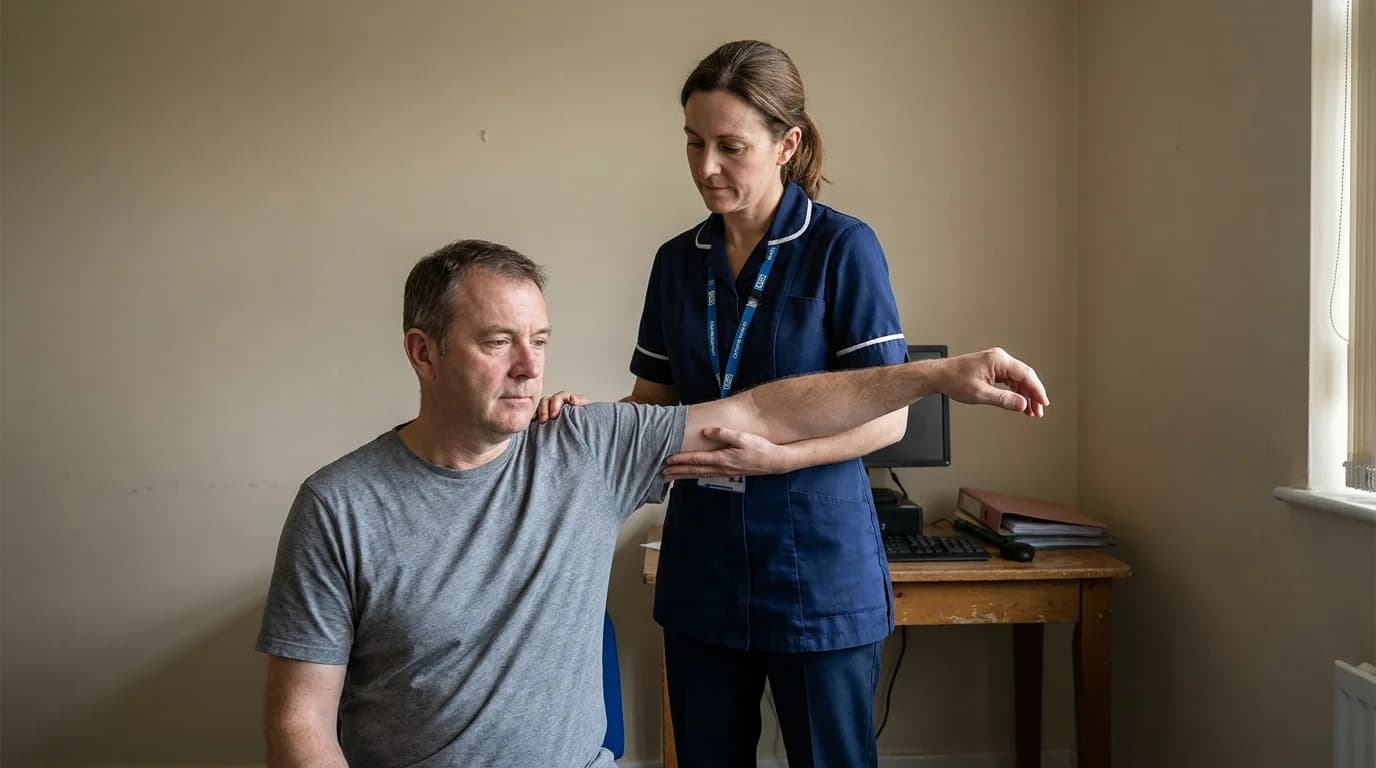
At a medico-legal assessment the expert takes a history from the claimant, reviews the relevant records and carries out a focused clinical examination, then writes the report afterwards rather than on the day. Most assessments are a single appointment; the report follows once the expert has considered the records and findings together.
The claimant is usually asked to describe how the incident happened, the symptoms since, and the effect on work, sleep and daily activities. For physical injuries the expert examines movement, tenderness and function. For psychological injuries the assessment is an interview against recognised diagnostic criteria. There is no treatment at the appointment; the purpose is assessment for evidence. Where the claim allows it, a report can be prepared on records alone without a physical examination.
- 01InstructionYou send the instruction and claimant details
- 02Records reviewThe expert reviews the relevant medical records
- 03ExaminationThe expert takes a history and examines the claimant
- 04DraftingThe expert writes the reasoned opinion
- 05Quality checkWe check it against every PD35 requirement
- 06DeliveryThe completed report reaches you
What are the main types of medico-legal report?
Claims call for different documents at different stages. Five formats cover almost everything a solicitor instructs, and the one you need depends on what is in dispute rather than on the injury itself.
- 01
Condition and prognosis report
The standard report in most personal injury claims
Sets out the injuries a claimant sustained, the treatment they have had, how they are recovering and when they are expected to reach their pre-accident state. It is the report that allows general damages to be valued, so it is the one most claims begin with.
- 02
Report on causation
Whether the incident actually caused the injury
Addresses whether the injury or condition was caused by the accident in question, on the balance of probabilities. These are instructed most often where a defendant argues the problem pre-dated the incident, or where symptoms appeared some time afterwards.
- 03
Addendum report and answers to Part 35 questions
Supplementary evidence after the first report
An addendum updates an existing report, for example after further imaging or a change in symptoms. Answers to written questions are different: under CPR Part 35.6 a party may put written questions to an expert, normally once and within 28 days of the report being served, and the answers form part of the expert's evidence.
- 04
Single joint expert report
One expert instructed by both parties
Where the parties agree, or the court directs, a single expert reports to both sides under CPR Part 35.7. An MRO can source and administer the instruction, but the expert is the single joint expert, not the organisation.
- 05
The first report in a soft-tissue RTA claim
Sourced through MedCo
For qualifying low-value soft-tissue road traffic accident claims, the first report must be sourced through MedCo rather than by direct instruction. Claims outside that category, including workplace, public liability and clinical negligence, are instructed directly.
Types of report we produce
We produce medical legal reports across the main injury and claim types in England and Wales, matching each instruction to an expert in the right discipline. Covering the main claim types under one MRO, rather than a single specialty, means you handle a mixed caseload without re-sourcing experts case by case.
 Road traffic accident reportsoccupant and non-occupant injuries, including soft-tissue whiplash claims
 Workplace accident reportsemployers' liability and public liability claims
 Clinical and medical negligence reportsaddressing breach of duty and causation
 Noise-induced hearing loss reportsfor industrial deafness claims
 Psychiatric and psychological reportsPTSD, travel anxiety and adjustment disorders
 Military claims reportsfor serving personnel and veterans
 Data breach reportsdistress and psychological injury assessments
 Specialist reportsEvery other discipline, from cardiology to maxillofacial, through our specialist route.
MedCo reports vs directly instructed experts
MedCo applies to one specific situation: the first report on a low-value, soft-tissue injury to the occupant of a motor vehicle, the whiplash-type RTA claim. For those cases the expert or MRO must be selected through the MedCo portal, which randomises the choice to protect the expert's independence. Most other claims are instructed directly.
| MedCo route | Direct instruction | |
|---|---|---|
| Applies to | First report on a low-value soft-tissue injury to a motor vehicle occupant (whiplash-type RTA) | All other claim types |
| How the expert is selected | Through the MedCo portal, which randomises the choice | Instructed directly, chosen for their specialty |
| Example claims | Whiplash and minor soft-tissue RTA occupant injuries | Cyclists, motorcyclists and pedestrians, workplace and public liability, clinical negligence, industrial disease, hearing loss |
| In place since | April 2015 | Standard practice |
As a MedCo registered MRO, we handle both routes. We can be selected through MedCo for qualifying RTA soft-tissue reports, and instructed directly for everything else. Using the wrong route can make a report challengeable.
CPR Part 35 compliance and quality control
Every report we deliver is written to comply with CPR Part 35, the rule that governs expert evidence in civil proceedings in England and Wales. Part 35 fixes the expert's overriding duty to the court, and Practice Direction 35 sets the required content, the declaration and the statement of truth. A report that meets these requirements is far harder to challenge on procedural grounds.
The rules also allow the parties to put written Part 35 questions to an expert under CPR 35.6, and to obtain supplementary or addendum reports where new records or developments arise. Where a single joint expert is instructed, the same duty of independence applies to both sides.
Our quality check confirms the report answers the instructions, includes every PD35 section, and carries the correct declaration before it leaves us. We are registered with the Information Commissioner's Office (ICO registration ZC040477) and handle claimant records accordingly.
How long does a report take and what does it cost?
Turnaround and cost both depend on the specifics of the claim, not a single fixed figure. What we can be clear about is the factors that move them, so you can plan the instruction.
Turnaround is driven by three things: how quickly the claimant attends the assessment, whether full medical records are available for review, and the specialty involved. Straightforward soft-tissue and whiplash cases are typically ready within 2 to 4 weeks of the assessment. Moderate cases involving multiple body areas take 4 to 8 weeks. Cases requiring further investigations such as MRI or neuropsychological testing take several additional weeks after results arrive.
On cost, MedCo soft-tissue RTA reports are charged at the fixed recoverable fee set by the Civil Procedure Rules, so the figure is not negotiable and is the same across providers. From 6 April 2025 the initial report is £226, a further report from a Consultant in A&E Medicine is £451, and from a Consultant Orthopaedic Surgeon £527, all excluding VAT. Reports outside MedCo are priced by the expert's specialty, the volume of records, and whether an examination or a records-only opinion is required. We confirm the fee and expected timescale with you at the point of instruction rather than after delivery.
Why instruct an independent MRO, and how to instruct us
Instruct us when you want independent medical evidence prepared in accordance with CPR Part 35 from an MRO that covers the full range of claim types and quality-checks every report before you see it. As a Medical Reporting Organisation we carry the expert sourcing, scheduling, records handling and PD35 compliance, so your team receives a report that is ready to use.
A note on our name. Expert Medical is Expert Medical Examination Ltd, company number 16702658. When you send an instruction, please check you are instructing Expert Medical Examination Ltd rather than a similarly named organisation.
To instruct us directly for work outside MedCo, send your instruction and the claimant's details through our contact page. For a claimant's first fixed-cost soft-tissue RTA report the provider must be sourced through the MedCo portal, which returns a randomised shortlist, so we can receive that instruction only where MedCo returns Expert Medical in the shortlist and the authorised user selects us there. You can review the disciplines we cover on our medical expert panel. We provide the medical evidence; the legal strategy stays with you.
Medical legal reports: frequently asked questions
What is a medico-legal report?
A medico-legal report is an independent medical opinion, written for legal proceedings, that sets out a claimant's injuries, their cause and their likely recovery. It is prepared by a qualified expert whose duty is to the court, and it is used as evidence in a claim rather than as part of treatment.
What is the difference between a medico-legal report and my medical records?
Your medical records describe the treatment you received as it happened, while a medico-legal report reviews those records and adds an expert opinion on diagnosis, causation and prognosis for a claim. The report is written specifically as evidence and complies with CPR Part 35; your records are not.
Who writes a medico-legal report?
A registered medical expert in the relevant specialty writes it, for example a GP, orthopaedic surgeon, neurologist or psychiatrist depending on the injury. We instruct experts registered with the GMC or HCPC, and their overriding duty under CPR Part 35 is to the court.
How much does a medico-legal report cost in the UK?
For MedCo soft-tissue RTA reports the fee is a fixed recoverable cost set by the Civil Procedure Rules: from 6 April 2025 the initial report is £226, a further report from a Consultant in A&E Medicine is £451, and from a Consultant Orthopaedic Surgeon £527, all excluding VAT. Reports outside MedCo are priced by the expert's specialty, the volume of records and whether an examination is needed, and we confirm the fee at the point of instruction.
How long does a medico-legal report take?
Straightforward soft-tissue and whiplash cases are typically ready within 2 to 4 weeks of the assessment. Moderate cases involving multiple body areas take 4 to 8 weeks. Cases requiring further investigations such as MRI or neuropsychological testing take several additional weeks after results arrive. We confirm the expected timescale when you instruct us.
What are medical reports for court proceedings?
They are medical reports written as evidence for a court rather than for treatment. The expert's overriding duty is to the court, not to whoever instructed or paid them, and that duty is set out in CPR Part 35.3. The report must follow Practice Direction 35, which means stating the expert's qualifications, the substance of their instructions, the literature relied on, any range of opinion and the reasons for the view taken, and it must carry the statement of truth in the prescribed form. A report that does not meet those requirements can be challenged or given less weight.
What is CPR Part 35 and why must the report comply with it?
CPR Part 35 is the rule governing expert evidence in civil cases in England and Wales, and it makes the expert's overriding duty a duty to the court. A report that complies with Part 35 and Practice Direction 35, including the declaration and statement of truth, carries weight as formal expert evidence and is much harder to challenge on procedural grounds.
What is MedCo and why is it used for whiplash claims?
MedCo is the portal that randomly allocates the expert or MRO for the first report on a low-value soft-tissue injury to a motor vehicle occupant, which protects the expert's independence. It applies only to those whiplash-type RTA reports; cyclists, pedestrians, workplace and other claims are instructed directly.
Do you work for claimants or defendants?
Either. The expert's duty under CPR Part 35 is to the court rather than to whoever instructs the report, so the same independent evidence can be relied on by both sides. We work with instructing solicitors and insurers; we do not give legal advice or run the claim.
Do I need a medico-legal report to make a personal injury claim?
Yes. A personal injury claim cannot proceed to settlement or trial without medical evidence establishing the nature of the injury, its cause and its likely duration. For low-value soft-tissue RTA claims the first report must be obtained through MedCo. For all other claims the solicitor instructs an appropriate expert directly.
Can a medico-legal report be challenged?
Yes. The opposing party can put written questions to the expert under CPR 35.6, request a supplementary report if new records emerge, or apply to the court for permission to instruct their own expert. A report that complies with CPR Part 35 and Practice Direction 35 is harder to challenge on procedural grounds, but either side can challenge the clinical opinion itself.
Can I choose which medical expert writes my report?
For MedCo soft-tissue RTA reports the expert or MRO is selected through the MedCo portal, which randomises the choice to protect independence. For all other claims the instructing solicitor chooses the expert, subject to the court's approval if the report is for proceedings. You cannot request a specific expert through MedCo.
What is a single joint expert?
A single joint expert (SJE) is one expert jointly instructed by both claimant and defendant under CPR 35.7. The court can direct a single joint expert in lower-value or less complex cases. The expert's duty remains to the court, both parties can put Part 35 questions to the expert, and neither side owns the report.
What happens if the claimant does not attend the medical examination?
If the claimant fails to attend, the appointment is rearranged. Repeated non-attendance without good reason can result in the claim being struck out by the court, because the defendant is entitled to have the injuries independently assessed. We contact the claimant to arrange a convenient date, time and location.
What is the difference between a medical report and a medico-legal report?
A medical report is a clinical document prepared as part of treatment, summarising a patient's condition and care. A medico-legal report is prepared specifically for legal proceedings: it addresses causation, prognosis and the impact of injuries on daily life, it is written by an expert whose overriding duty is to the court under CPR Part 35, and it carries a formal declaration and statement of truth.
Ready to instruct Expert Medical?
Whether you have a single instruction or a high-volume caseload, our team is ready to help. Call us directly or send an enquiry and we’ll respond within 24 hours.